


Colli Etruschi
The oil mill
Collection
The ancient Romans already knew our secret: picking the olives at the right time.
Pliny in the Naturalis Historia recommended picking the olives when they are still green or at the beginning of veraison when the bright green of the drupes begins to turn towards darker colors oleum quam very sour olive optimum fieri (Pliny, Naturalis Historia VII 17-33) from the most unripe olive you get excellent oil.
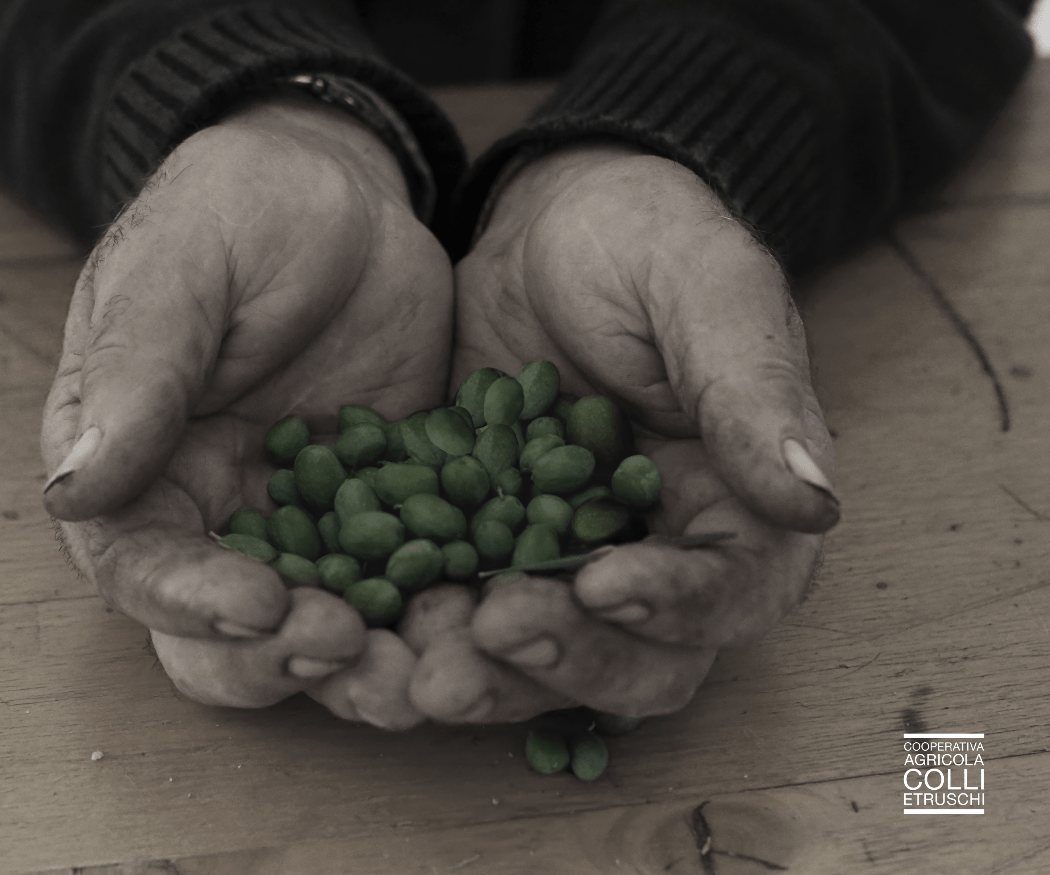
From the tree to the crusher without touching the ground.
The picking is manual with the help of facilitating equipment or in some cases mechanical, but always directly from the tree, never on the ground. This allows us to have an intact product, without dents or injuries. We then transport the olives to the mill on the same day of collection, placed in perforated boxes that favor ventilation.
The crushing
First of all: cleaning.
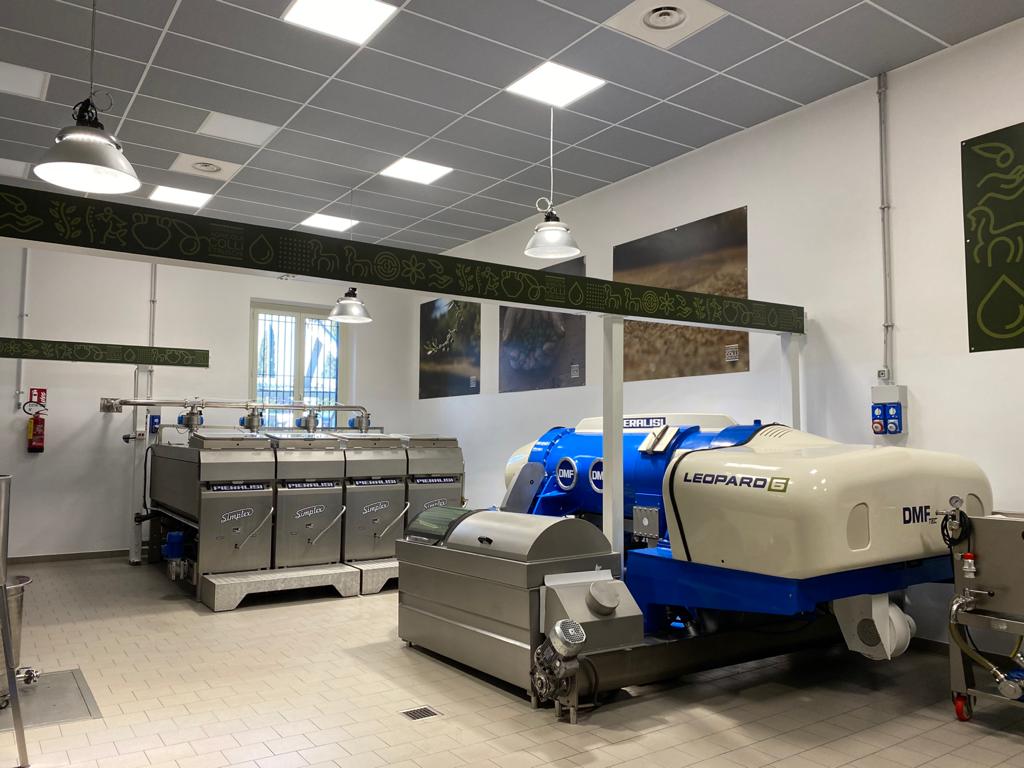
The process of obtaining the oil is complex and delicate and requires the utmost attention to the cleanliness of the rooms and machinery. For this reason, in our oil mill we have taken steps to detach the machinery from the ground to facilitate more thorough cleaning carried out with hot water without adding chemical detergents.
Speed and transparency
The olives arrive at the mill directly from the fields placed in rigid perforated boxes and access our weighing system which is in line with the unloading, to make everything faster and more transparent.
Experience in technique.
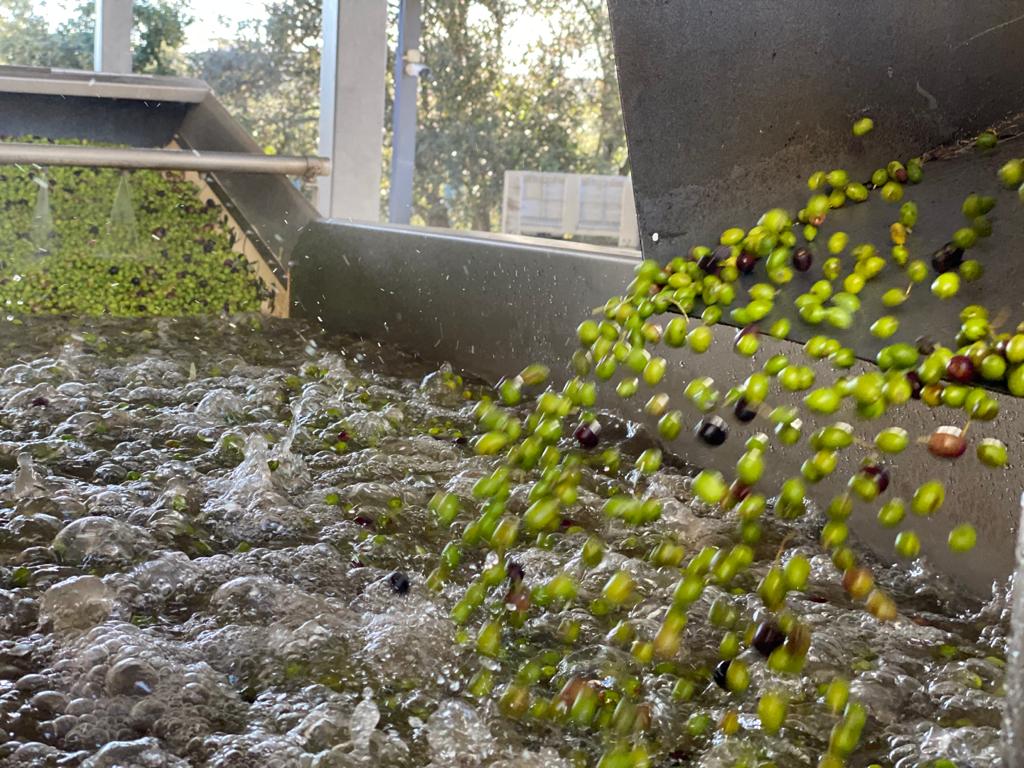
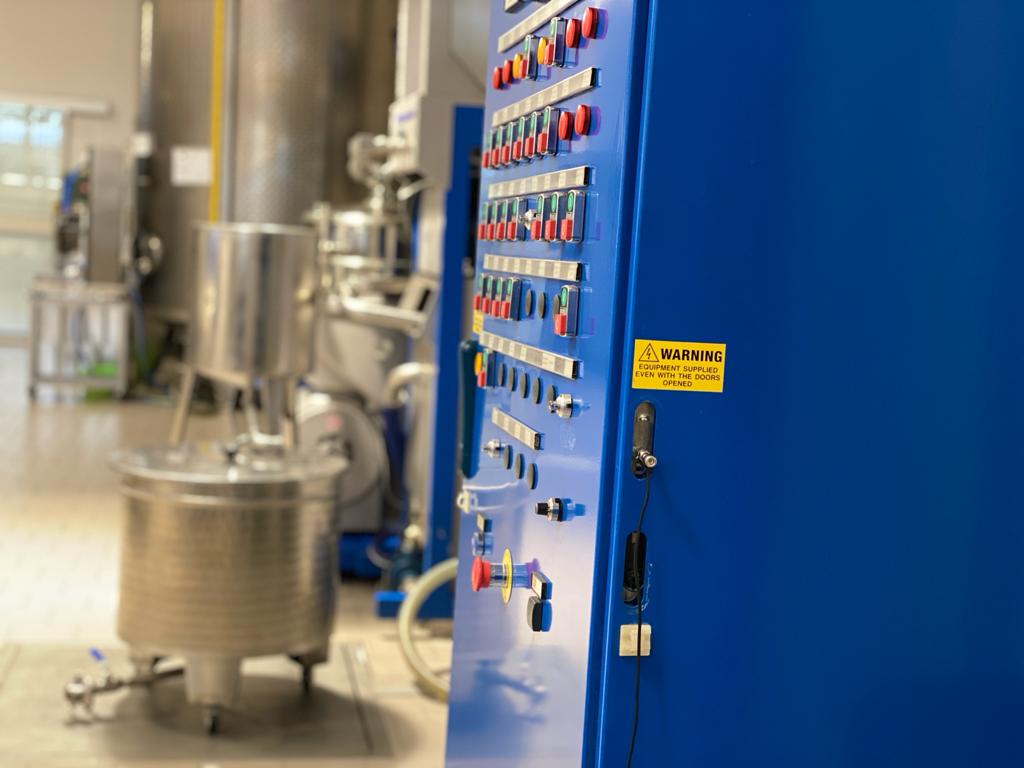
We have recently made further improvements to our system including a de-branching that allows us to completely defoliate the product and, above all, a washing system with integrated thermal conditioner. This allows us, if necessary, to lower the temperature of the product BEFORE any transformation in order to subsequently carry out a real extraction at the desired temperature without the risk of emulsions.
Looking to innovation to obtain a healthy product, rich in polyphenols
Our attention is concentrated with particular care in preserving the aromas and in maintaining the organoleptic characteristics avoiding alterations of taste due to fermentation processes. From here the olives are sent to the crusher which crushes them and transforms them into paté (pulp) ready for kneading. The kneaders are hermetically sealed steel tanks to avoid the dispersion of aromas in which it is possible to add nitrogen and thus eliminate any risk of oxidation that would arise in contact with the air and with the heat. In these tanks, the pulp is slowly mixed at a constant temperature of 24°-27° for 30 minutes. Subsequently the pulp is pushed towards the centrifuge where the separation of the solid part, i.e. peels and pits (pomace) from the liquid one (oil) takes place. In our Cooperative this step takes place in the Pieralisi Multifunction Decanter (DMF)..
The system allows you to work without adding water to the pasta with two notable advantages: on the one hand, the integrity of the pasta itself which is not "washed out" so it maintains its charge of polyphenols and other precious water-soluble substances, giving us a more rich and qualitatively superior, on the other a considerable reduction in water consumption and a lowering of disposal costs.
Caring for the protection of the environment.
The little vegetation water that is produced in any case is dispersed directly on the land of the members with a fertilizing action. The paté, on the other hand, is used as biomass for the production of electricity, transforming what was a cost of disposal into a value.
Conservation
The conservation of the oil immediately after pressing is the most delicate phase of the process to which we pay particular attention. In fact, the guarantee of maintaining the characteristics obtained during production will depend on the right conservation.
Protected from light and at controlled temperatures.
After filtering, we transfer the oil into stainless steel tanks in nitrogen saturation, sheltered from light and air and away from thermal oscillations, in a special room, air-conditioned and at a controlled temperature between 15° and 17°.